


Want customers to book rentals without calling your team? Want easier bookings and smoother daily rental management? Discover what are the options for offering online rentals and find your best fit.
The wrong choice can slow your business growth. Missed bookings and confused customers create extra work. Your team deserves simpler tools and smoother daily operations.
Good news! This guide compares three popular rental options. Explore custom websites, rental platforms, and WordPress plugins. You'll also learn how to choose wisely, and grow bookings. Let's get started!
What Are the Options for Offering Online Rentals?
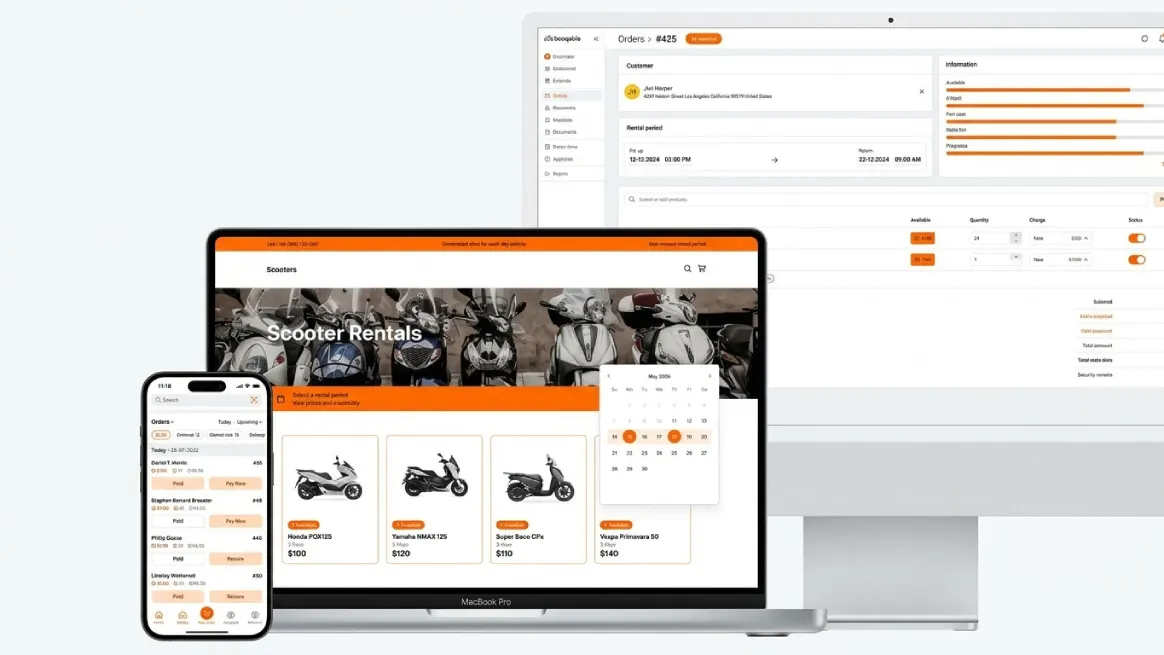
Want to let customers book your rentals online? You have three main options: build a custom website, choose rental management software, or add WordPress rental plugins.
Each option offers different benefits, costs, and setup times. Your best choice depends on your business needs and goals.
| Online rental option | How it works | Main advantages | Main limitations |
|---|---|---|---|
| Custom website | Developers build a website around your needs. | Flexible design and custom booking steps. | Higher costs, longer setup, and ongoing maintenance. |
| Rental management platform | Software connects bookings, inventory, payments, and orders. | Simplifies daily tasks in one system. | Subscription fees and possible feature limits. |
| WordPress rental plugins | Plugins add booking tools to an existing website. | Often affordable and easy to add. | Updates, compatibility issues, and limited features. |
Businesses can offer online rentals through custom websites, rental management platforms, or WordPress plugins. Each option offers different costs, flexibility, and features. Choose one that fits your budget, booking needs, and growth plans.
In the following sections, we’ll explore each option in detail, including its benefits, limitations, and ideal use cases.
Custom Website Development
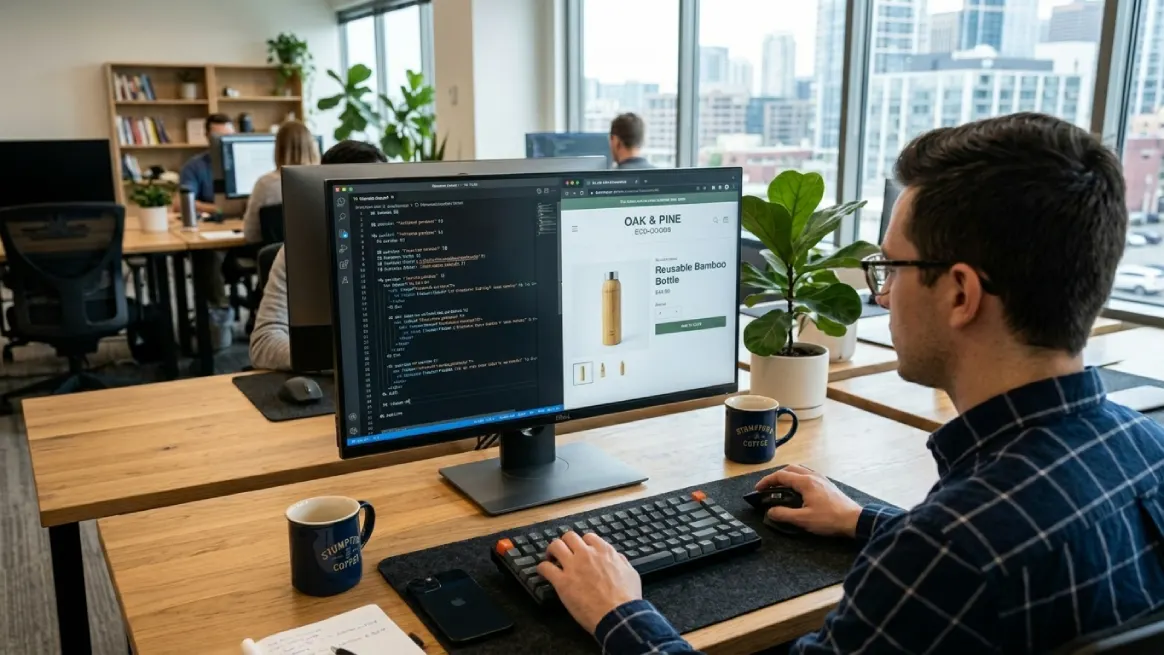
A custom rental website lets you shape your customers’ entire booking experience. You can match your brand, rental rules, and business needs. Developers can build product catalogs, booking calendars, payment options, and customer accounts.
You can also add special pricing, deposits, and delivery requirements. For example, an equipment rental business website may need detailed inventory records. Construction equipment companies may also manage deliveries across several job sites. Custom development can support these needs with careful planning.
However, building a custom website takes time, money, and technical support. You must also plan for ongoing updates and security. Before choosing this option, consider your budget and long-term goals.
Custom Website Development at a Glance
| Factor | What to expect |
|---|---|
| Cost | Usually higher upfront development costs |
| Setup time | Longer, depending on features and complexity |
| Customization | Strong control over design and booking workflows |
| Maintenance | Requires ongoing technical support and security planning |
| Best for | Established businesses with specialized rental needs |
| Main drawback | Higher costs and greater technical responsibility |
| Growth potential | Can support unique workflows through planned development |
Advantages of Custom Rental Websites
Custom development gives you greater control over your online rental experience. You can shape the design, booking steps, and features. This flexibility helps your website reflect your brand and customers’ needs.
With professional web design, you can create a clear, consistent experience. Developers can customize rental periods, deposits, pricing rules, and checkout steps. These features help when standard tools cannot meet your requirements.
Custom websites can also support specialized rental workflows. For example, construction equipment companies may need job-site delivery details. They might also need inventory records across multiple locations. Developers can build these functions into your booking process.
You can plan future changes around your business goals, too. However, updates may require developer support or additional services. Plan these costs early to avoid unexpected expenses later.
Disadvantages of Custom Rental Websites
Building a custom website usually requires a larger upfront investment. Costs depend on design, booking features, integrations, and developer rates. Testing and technical requirements can also increase your total budget.
Custom projects often take longer to launch than existing platforms. Developers must understand your needs, build features, and test everything. Complex booking rules can add more planning and development time.
After launch, you must arrange ongoing maintenance and security. This may include hosting, backups, updates, bug fixes, and security checks. Payment providers handle some tasks, but other responsibilities remain yours.
You may also need technical experts for future changes. Without reliable support, even small updates can cost time. Weigh these ongoing responsibilities before committing to custom development.
Who Should Choose Custom Website Development?
Custom development may suit established rental businesses with specialized operational needs. It also works for companies with enough funding and technical support. This approach makes sense when standard platforms lack essential features.
For example, businesses offering construction equipment rentals may need detailed asset records. They may also coordinate job-site deliveries and location-based inventory. A carefully planned custom system can support these workflows.
However, custom development may not suit every new rental business. Owners seeking a quick, affordable launch may prefer existing rental software. These platforms can provide useful tools without building everything from scratch.
Before deciding, compare development costs with future maintenance expenses. Consider whether rental management software can meet your needs. Choose the option that fits your budget and growth plans.
Rental Management Platforms
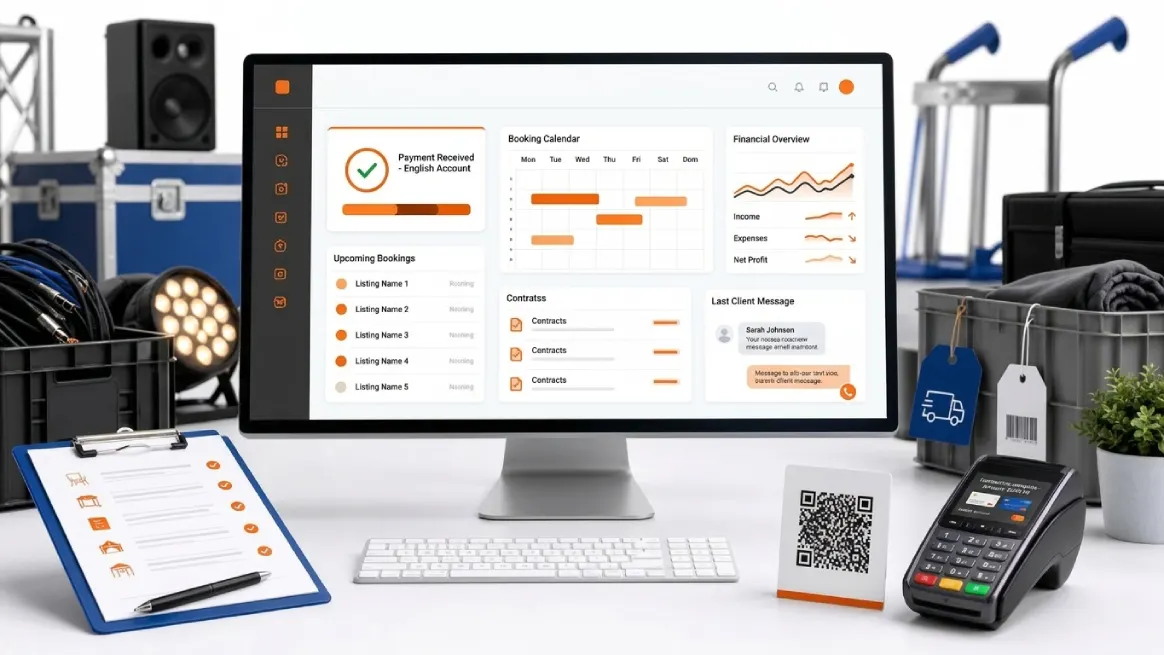
Building a custom booking system takes time, money, and technical support. A rental management platform offers a simpler way to start. It connects online bookings with your daily rental operations.
Rental management solutions like RentMy helps businesses manage online bookings and rental tasks together. You can use its booking website or connect rental features to an existing website. This approach helps you organize customer reservations without building everything yourself.
Rental Management Platforms at a Glance
| Factor | What to expect |
|---|---|
| Cost | Recurring subscriptions; Some platforms may charge extra fees |
| Setup | Often quicker than custom development |
| Benefits | Connected bookings, inventory, payments, and orders |
| Limitations | Feature restrictions and varying customization options |
| Best for | Businesses seeking simpler rental operations |
| Examples | Party, car, and equipment rental businesses |
| Growth | Supports expansion |
Key Benefits of Rental Management Platforms
Rental management platforms let customers book outside regular business hours. Customers can browse products, select dates, and submit reservations online. Your team can manage bookings, inventory, payments, and customer details centrally.
Accurate availability records help reduce booking conflicts. Depending on the provider, tools may include delivery planning, reporting, and asset tracking. Compare these features with your rental management solution needs.
Automation can simplify confirmations, reminders, and repetitive tasks. Review your equipment rental software requirements before comparing providers. The right rental software can help your team manage daily work more efficiently.
Potential Limitations of Rental Management Platforms
Rental management platforms usually charge recurring subscription fees. Some providers also charge extra for integrations or advanced features. Compare total costs before choosing a plan.
Customization also varies between providers and plans. Check booking options, payment methods, customer support, and data access. These details matter when choosing rental software for your business.
Who Should Choose a Rental Management Platform?
These platforms suit businesses wanting to launch online without building everything themselves. They can also help teams organize growing inventories and busy schedules.
For example, party rental businesses coordinate event dates, multiple items, and delivery schedules. Car rental companies manage vehicle availability across rental periods. Equipment rental businesses may also need asset records and maintenance planning.
Choose a platform that matches your inventory and daily workflows. Compare its costs, features, and support before making your decision. The right solution should meet today's needs and support future growth.
WordPress Rental Plugins
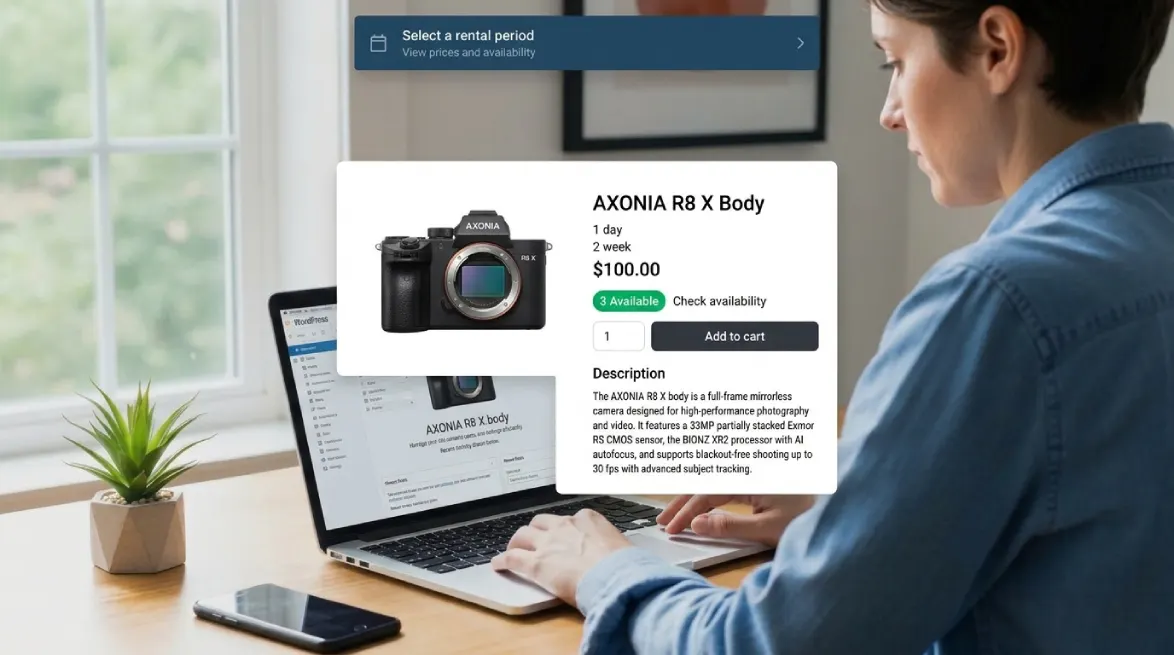
WordPress rental plugins add booking tools to your existing website. Customers can check availability, choose dates, and submit orders online. This option works well if your business already uses WordPress.
You can keep your current design, blog, and website content. Some plugins offer simple bookings, while others provide advanced features. Before choosing, check compatibility, updates, support, and booking options.
WordPress Rental Plugins at a Glance
| Factor | What to expect |
|---|---|
| Cost | Plugin fees, extensions, hosting, and support |
| Setup | Often straightforward for basic rental needs |
| Benefits | Adds bookings without rebuilding your website |
| Limitations | Compatibility issues and limited advanced features |
| Best for | Small businesses with simple rental workflows |
| Maintenance | Requires updates, backups, and security checks |
| Growth potential | Depends on plugin features and available integrations |
Advantages of WordPress Rental Plugins
Many plugins offer booking calendars, rental periods, and availability settings. Some also support deposits, add-ons, and payment processing. Check available features before deciding to add rental products to your website.
You can keep existing pages and content while testing rental demand. Retailers can start small and expand as customer interest grows. And follow a clear plan to add rentals to your retail business.
Disadvantages of WordPress Rental Plugins
Plugins need regular updates, testing, and ongoing website care. Some offer only basic booking tools and limited pricing options. Advanced features may require paid extensions or extra development.
Multiple plugins can also cause compatibility problems. Check whether your plugins work with your theme and WordPress version. Test booking and checkout after updates to catch issues early.
You must also manage backups, security, and technical support. Complex inventory, delivery planning, and repairs may need additional tools. Review your workflows before choosing a plugin-based setup.
Who Should Choose WordPress Rental Plugins?
WordPress plugins suit businesses with simple rental processes. They work especially well for owners already running WordPress websites. For example, bike rental businesses may need basic calendars and availability controls.
Retailers can also add rentals alongside their existing product sales. Start with a few products and learn what customers prefer. Explore how to turn your WordPress website into a rental booking website.
However, larger inventories may need stronger management tools. Multiple locations, equipment repairs, and delivery schedules add complexity. Compare plugins with dedicated platforms before making your decision.
How to Choose the Right Online Rental Option
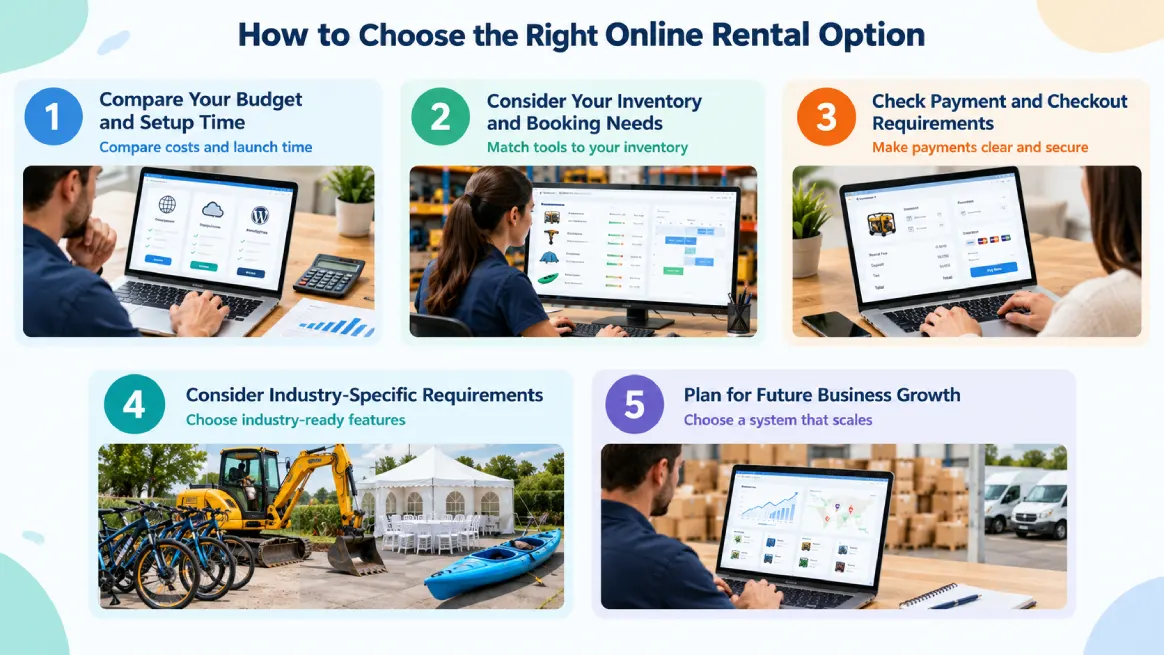
Choosing how to offer rentals online starts with your business needs. Compare your budget, inventory, booking process, and growth plans. Custom websites, rental platforms, and WordPress plugins each offer different benefits.
Compare Your Budget and Setup Time
Start by comparing launch costs and ongoing expenses. Custom websites often cost more upfront because developers build features. Plugins may cost less initially, while platforms offer ready-made tools.
Remember to include hosting, subscriptions, maintenance, and payment fees. Setup time also varies with your needs and technical resources. Custom builds usually take longer than simpler plugin or platform setups.
Consider Your Inventory and Booking Needs
Choose a system that matches your rental inventory. Small shops may need basic calendars and quantity tracking. Larger businesses might require asset records, repairs, and location controls.
Accurate availability records help teams prevent double bookings across booking channels. Look for tools that help optimize inventory for a rental business. Make sure staff can track rental inventory across locations and update unavailable items.
Check Payment and Checkout Requirements
Customers should review rental dates, fees, deposits, and totals. Clear checkout details help customers understand orders before paying. Choose secure payment options that match your rental terms.
Compare online rent payment systems for payment methods, fees, and refunds. Monthly rentals may also need tools to offer recurring-billed rentals online. Send clear confirmations with booking details after every successful reservation.
Consider Industry-Specific Requirements
Different rental businesses need different booking rules and workflows. Bike shops may offer hourly bookings, while party rentals need delivery schedules. Construction equipment businesses may require asset tracking and maintenance records.
For boat and kayak rentals, accurate pickup times matter greatly. Check whether your system supports hourly slots and watercraft availability. Also consider preparation time, returns, inspections, and delivery requirements.
Plan for Future Business Growth
Choose a solution that supports your future business goals. Consider adding products, hiring staff, or opening new locations. Your booking system should handle growth without adding unnecessary work.
Check support for additional users, inventory, and reporting tools. You can start with essentials and add features as needed. Compare ongoing costs, flexibility, and support before making your final choice.
Bring Your Online Rental Operations Together
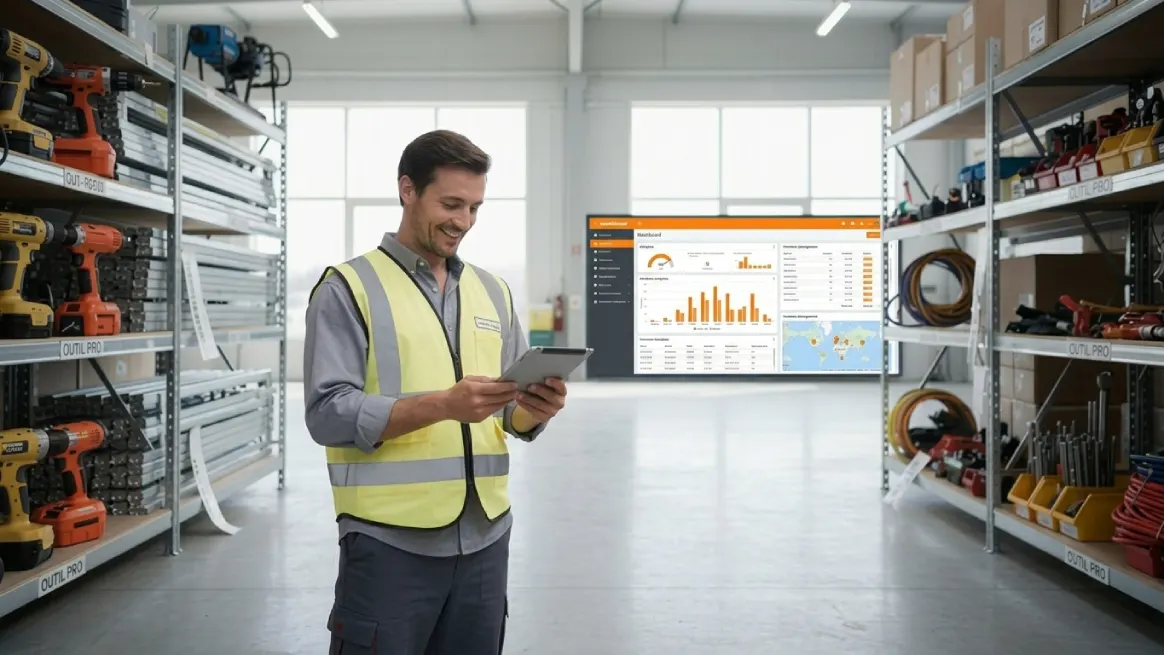
Managing bookings through separate tools can quickly become frustrating. Your inventory, customer details, payments, and reservations need constant updates. Missing one change can create confusion or booking conflicts.
A connected rental management solution makes daily tasks easier. You can manage bookings, inventory, orders, and customer information together. This gives your team a clearer view of daily operations.
Solutions like RentMy connect these rental activities. Customers book online while staff manage orders. RentMy also helps organize sales tax charges with rental transactions. This makes tax details easier to manage.
As your business grows, connected operations can reduce manual work. You can spend less time chasing information and more time serving customers.
Grow Your Online Rental Business with
Manage bookings, inventory, and payments seamlessly in one modern platform.
- Free 14-day trial
- No credit card required
Final Thoughts
Well, that's a wrap! We've explored what are the options for offering online rentals, from custom websites to rental platforms and WordPress plugins. We also covered choosing tools and growing your business online.
The opportunity keeps getting bigger. Report shows the global sharing economy to grow by $1.12 trillion between 2025 and 2029. That's a projected annual growth rate of 32.3%.
The next move is yours. Choose tools that fit your business and simplify bookings. Give customers a better rental experience. Start today, and build a business ready for tomorrow.
FAQs
What Policies Should I Publish Before Accepting Online Rentals?
Clearly explain rental periods, deposits, cancellations, refunds, late fees, and damage charges. Customers should understand these terms before confirming a booking.
Are Rental Deposits Always Nonrefundable?
No. Refund rules depend on your agreement and local laws. Explain when you keep or return deposits, and make sure your terms follow consumer protection rules.
Do I Need Insurance for an Online Rental Business?
Insurance can help protect your business against certain losses. Ask an insurance professional about coverage for rented equipment, property damage, theft, and customer injuries.
How Can I Reduce Last-Minute Rental Cancellations?
Send booking confirmations and reminders before pickup or delivery. Publish clear cancellation terms, and consider deposits where local laws allow them.
What Should I Do When a Rented Item Becomes Unavailable?
Contact the customer promptly and explain the issue. Offer another available date, a suitable replacement, or a refund when appropriate.


